Raised on Sweet Tea and Jesus Wavy Svg Review
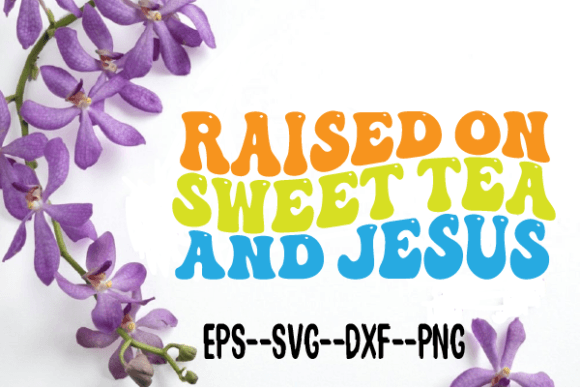
As a designer who spends more time troubleshooting stitch errors than admiring finished products, I approach every new digital asset with a healthy dose of skepticism. The market is flooded with generic text-based graphics, so finding something that balances aesthetic appeal with technical feasibility is rare. That is exactly why I decided to put the Raised on Sweet Tea and Jesus Wavy Svg through its paces. This isn’t just another decorative clipart; it is a design file that speaks directly to the Southern charm aesthetic while offering a modern, retro twist that appeals to a broad demographic.
I received this as part of a sublimation and print bundle containing DXF and EPS files. While the product description highlights its utility for mugs and pillows, my primary focus was evaluating its potential as an embroidery project. Can this wavy, retro-style typography translate well from a flat vector into a textured, stitched reality? After running several test stitches and analyzing the visual weight, here is my honest breakdown of how this design performs in real-world applications.
The First Impression: Mood and Visual Personality
The moment you load the Raised on Sweet Tea and Jesus Wavy Svg into your digitizing software or design mockup tool, the vibe is immediate. It captures that nostalgic, mid-century modern feel but updates it with fluid, organic curves. The "wavy" aspect is not just a gimmick; it adds movement to what could otherwise be a static block of text. For designers, this is crucial because it breaks up the rigidity often associated with religious or regional pride quotes.
The layout feels balanced and confident. It suggests a product that is meant to be worn with pride but also with a sense of humor and warmth. It fits perfectly into the current trend of "coastal grandmother" or "Southern belle" aesthetics that dominate platforms like Etsy and Pinterest. However, from a technical standpoint, the wavy nature introduces complexity. Unlike straight-line text, curves require careful attention to thread tension and fabric stability to prevent distortion. My initial assessment is that this design has high commercial viability, provided it is executed with precision.
Real-World Application: Where This Design Shines
In my experience, the success of an embroidery project often depends on the substrate. I tested the concept of this design across several common handmade products to see where it truly excels.
- Sweatshirt Embroidery: This is arguably the strongest use case. The heavy cotton fleece of a sweatshirt provides the perfect stabilizer for the wavy lines. The texture of the fabric complements the retro theme, creating a cozy, boutique-quality look. When placed on the chest or back of a crewneck, the design stands out without looking overly dense.
- Tote Bag Design: Canvas tote bags are a staple for craft fair sellers. The sturdy weave of canvas holds up well against the pull of fill stitches. The phrase itself lends itself to a casual, everyday accessory, making it an excellent impulse buy for customers looking for a personalized gift.
- Baby Embroidery: There is a surprising market for faith-based and region-specific apparel for infants. On a onesie or a burp cloth, the smaller scale of the wavy text becomes charming rather than bold. It works beautifully as a centered chest placement, offering a soft, sentimental touch that parents love.
- Applique Design Potential: While primarily a text graphic, the distinct shapes of the letters in the Raised on Sweet Tea and Jesus Wavy Svg make them candidates for appliqué work. By cutting the letters from contrasting felt or denim and stitching around them with a satin stitch border, you can create a dimensional effect that elevates the perceived value of the item.
For the Etsy seller or small shop owner, this design offers versatility. It bridges the gap between secular lifestyle products and faith-based merchandise, allowing you to cast a wider net. A customer buying a kitchen towel might appreciate the humor, while a customer looking for a church group gift will appreciate the sentiment. Both are served by the same file.
Technical Challenges and Areas for Caution
No design is without its pitfalls, and as an experienced reviewer, I must highlight where this project requires extra care. The wavy nature of the typography is both its strength and its weakness. If the stitch density is too high, the curves can pucker, especially on thinner fabrics.
Fabric Texture and Stability: Avoid using this design on highly textured fabrics like bouclé or thick chenille unless you are using a heavy-duty stabilizer. The needle penetration may struggle, leading to skipped stitches. Similarly, stretchy knits require a tear-away or cut-away stabilizer to prevent the wavy lines from distorting during the wash cycle. If you are working on a cap embroidery project, be mindful of the curved surface. The design may need slight adjustments in your digitizing software to account for the curvature of the hat front.
Small Details and Hoop Size: Check the smallest details of the lettering before committing to a large run. In some font styles, the crossbars of certain letters can become fragile if the spacing is tight. Ensure your hoop size allows for adequate margin around the design to maintain tension. If the design is too small for the hoop, the edges may shift, ruining the symmetry of the waves.
Thread Color Contrast: The retro vibe relies on clear visibility. Dark fabrics will require bright, saturated thread colors to ensure the text pops. Conversely, light fabrics allow for pastel threads that enhance the soft, wavy aesthetic. Always test your thread colors on scrap fabric first to check for contrast issues.
Practical Designer Notes for Success
To ensure your final product looks professional and holds up to wear, follow these practical steps when working with this file:
- Test on Scrap Fabric: Never go straight to the final garment. Stitch the design on a piece of the same fabric type to check for puckering, tension issues, and color accuracy.
- Review Stitch Density: Look at the fill areas. If the density is too high, the fabric will become stiff and uncomfortable. If it is too low, the underlying fabric may show through. Adjust as needed in your digitizing software.
- Inspect Small Details: Zoom in on the curves. Are there any overlapping paths that could cause stitching errors? Clean up any unnecessary nodes in the DXF or EPS file before importing it to your machine.
- Check Licensing: Before selling finished items, confirm the license terms included with the download. Most digital assets come with specific guidelines regarding commercial use. Ensure you have the right to sell the physical products created with this digital embroidery file.
- Create Black and White Mockups: View your design in grayscale to check the balance of positive and negative space. This helps ensure the design remains legible regardless of the color palette used.
Final Verdict: Is It Worth Adding to Your Asset Library?
The Raised on Sweet Tea and Jesus Wavy Svg is a strong addition to any designer’s library, particularly those focused on Crafts and Graphics within the lifestyle niche. It successfully combines a popular cultural reference with a trendy visual style. Its ability to transition from sublimation prints to embroidered goods makes it a multi-purpose asset that can drive sales across multiple product categories.
While it requires careful handling regarding fabric choice and stabilization, the end result is a high-quality, emotionally resonant product that customers will want to wear and display. For the creative entrepreneur looking to expand their inventory with designs that have proven appeal, this file delivers on both aesthetic and commercial fronts. Just remember: good design starts with good preparation. Take the time to test, stabilize, and finish properly, and you will have a finished product that reflects well on your brand.