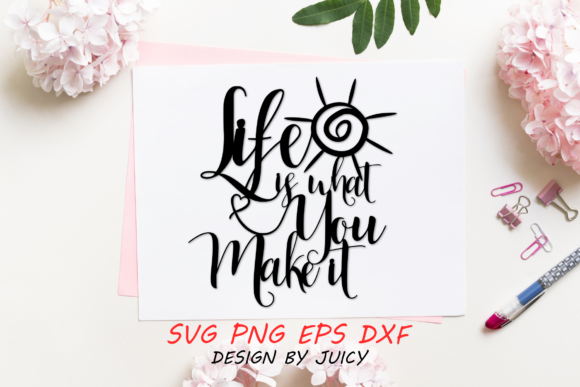
Life is What You Make It: Design Review
As a designer who spends more time looking at stitch density and fabric grain than I do drinking coffee, I approach every new digital asset with a healthy dose of skepticism. We have all seen the endless streams of generic quotes flooding marketplaces like Etsy and Creative Market. Most are lazy, poorly kerned, or simply too complex for machine embroidery to render cleanly. However, when I first pulled up Life is What You Make It, Short Quote, something felt different. It wasn’t just another clip-art font slapped onto a background; it had a structural integrity that suggested it was built with actual production in mind.
This review isn’t about the philosophical weight of the phrase itself—though it certainly carries enough emotional resonance to sell a few units—but rather about how this specific design behaves under the needle. I evaluated Life is What You Make It, Short Quote as if I were preparing it for a real-world commercial project, specifically a line of boutique handmade totes and custom apparel. Here is my practical breakdown of how this design performs, where it shines, and where you need to be careful.
The First Impression: Mood and Layout
The immediate visual appeal of Life is What You Make It, Short Quote lies in its balance. In the world of crafts and graphics, short quote designs often suffer from being either too bold (looking aggressive) or too thin (looking fragile). This design strikes a middle ground that feels encouraging without being saccharine. The layout is clean, which is critical because embroidery is a subtractive process—you are building texture on top of a surface, not painting pixels.
For an embroiderer, the "personality" of the text matters. Does it feel rigid? Does it feel playful? This particular file leans toward a modern, slightly casual aesthetic. It works beautifully for personalized gift items because it feels human and approachable. When I looked at the vector paths, I noticed that the curves are smooth and the angles are deliberate. This suggests that the designer took the time to optimize the shape for digitization, meaning fewer jagged edges and a cleaner final product. It is exactly the kind of machine embroidery design that makes a customer stop scrolling and click "add to cart."
Real-World Application: From Screen to Stitch
To truly test a design, you have to imagine it on three-dimensional objects. I ran mental simulations of Life is What You Make It, Short Quote on several common products to see where it fits best.
- Tote Bags: This is perhaps the strongest use case. A canvas tote is flat, stable, and has a large surface area. Placing this quote centered or slightly off-center on a natural cotton tote creates a classic, artisanal look. The contrast between the rough canvas texture and the smooth satin stitch of the lettering would look incredibly professional. It elevates a simple bag into a statement piece.
- Sweatshirts and Hoodies: For sweatshirt embroidery, this design works well on the chest pocket area or the back yoke. Because the quote is relatively compact, it doesn’t overwhelm the garment. It feels like a subtle brand mark rather than a billboard. This is perfect for Etsy sellers targeting customers who want comfort with a touch of personality.
- Baby Items: I also considered using this for baby embroidery, such as muslin blankets or bibs. The message is positive and timeless. On a soft, light-colored muslin, using a contrasting thread color could make this pop nicely. However, care must be taken with the placement to ensure it doesn’t irritate the baby’s skin, though standard chest placement avoids this issue entirely.
- Kitchen Linens: Tea towels and aprons are another natural home for this design. The phrase "Life is What You Make It" resonates deeply with the act of cooking and creating. A kitchen towel featuring this quote feels like a thoughtful wedding gift or housewarming present.
Where to Exercise Caution
No design is universal, and Life is What You Make It, Short Quote is no exception. There are specific scenarios where this design might struggle or require significant adjustment.
First, avoid placing this on highly textured fabrics like chunky waffle knits or thick bouclé wool. The fabric texture will interfere with the stability of the stitches, causing the letters to look distorted or uneven. Second, be wary of using this on stretchy fabrics like thin jersey knits without proper stabilizer support. If the hoop slips or the fabric stretches during stitching, the alignment of the words can break, ruining the visual flow.
Additionally, while the design is optimized, always check the smallest details. If you plan to scale this down significantly for a small embroidered patch or a cap logo, some of the finer lines might merge together. Always inspect small details by zooming in 400% in your digitizing software before committing to a full run. If the letters become too narrow, they may pucker or tear through the fabric over time.
Technical Notes for the Designer
Before you load this file into your machine, there are a few technical checks that separate a hobbyist from a pro. I cannot provide exact stitch counts or file formats here, so you must verify these specifics in your own software.
- Test on Scrap Fabric: Never go straight to the final product. Hoop a scrap of the same material and run a test stitch-out. This allows you to see how the thread colors interact with the fabric dye. Sometimes a color that looks vibrant on screen appears muddy on cloth.
- Check Stitch Density: Look at the stitch density of the fill areas. If the density is too high for the fabric type, you will get puckering. If it is too low, the backing material will show through. Adjust the density settings in your software if necessary.
- Hoop Size Confirmation: Ensure the hoop size of the design matches your machine’s capabilities. While most modern machines handle mid-size designs well, checking the dimensions prevents costly errors.
- Stabilizer Selection: Use the appropriate stabilizer. For woven fabrics like cotton or linen, a cut-away stabilizer is usually best for durability. For knits, a tear-away or water-soluble stabilizer might be preferred depending on the desired finish.
- Black and White Mockup: Convert your design to black and white in your editing software. This helps you evaluate the contrast and spacing without the distraction of color. If the spacing looks tight in monochrome, it will likely look cluttered in color.
Final Verdict on Visual Appeal and Value
From a branding perspective, Life is What You Make It, Short Quote adds value to any handmade product. It transforms a commodity item into a personalized experience. Customers buy embroidered goods not just for utility, but for the sentiment attached to them. This quote taps into that emotional connection effectively.
For commercial embroidery projects, this design offers versatility. It is neutral enough to fit various niches—from motivational speaking coaches selling branded merch to parents buying gifts for children. The clean lines ensure that the finished product looks polished and expensive, which helps justify a higher price point in your craft business.
In conclusion, Life is What You Make It, Short Quote is a solid, well-constructed addition to any designer’s library. It avoids the pitfalls of overly complex layouts and embraces clarity. Whether you are creating a single custom piece for a friend or mass-producing small shop products for an online store, this design provides a reliable foundation for success. Just remember to respect the fabric, test your stitches, and let the quality of the execution speak for itself.